

BioJapan 2025 Exhibition Report
Held at Pacifico Yokohama from October 8 to 10, 2025,BioJapan 2025and,Nagaoka University of Technology COI-NEXTWe participated in the event. In this article, we will report on the details of our exhibition and our efforts toward realizing a fully circular bio-community based on local resources.
“MORI to TANBO” Akita Prefectural University × Nagaoka University of Technology COI-NEXT
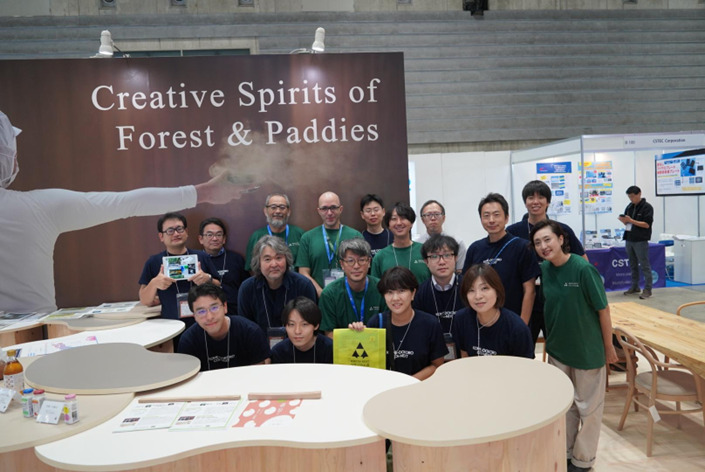
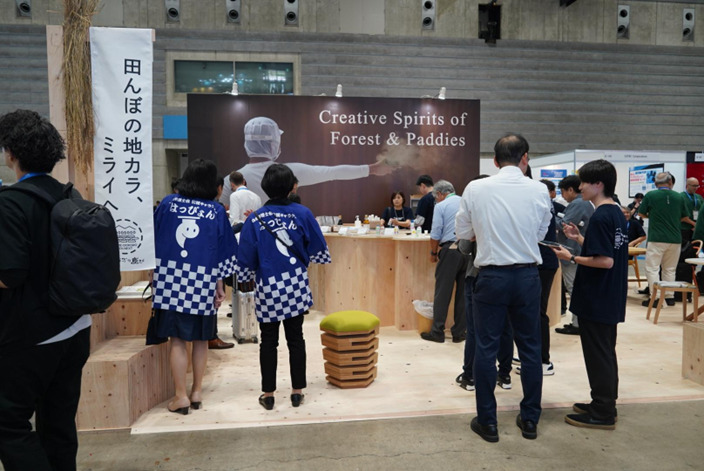
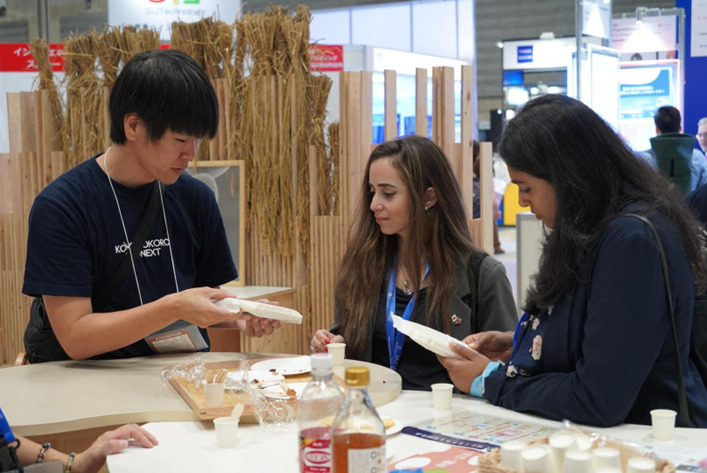
Following on from last year, this year as well,Akita COI-NEXTWe held a joint exhibition with [...]. The title of our booth, “MORI to TANBO,” has two meanings.
First, it reflects the unique characteristics of each region: Akita’s abundant forest resources and Nagaoka’s rice paddies, which are a source of pride. Second, it symbolizes the continuous cycle of resources that stretches from the forest to the rice paddies.
Fallen leaves from the forest return to the soil, becoming a rich source of nutrients. That fertile soil nurtures the rice plants, and the rice is transformed into a fermented food. Finally, it reaches our tables. This can be described as the culmination of ancient Japanese wisdom, in which the forest, the rice paddies, and the fermentation process are closely intertwined.
Sharing Japan’s World-Class Solid-Media Culture Technology with the World
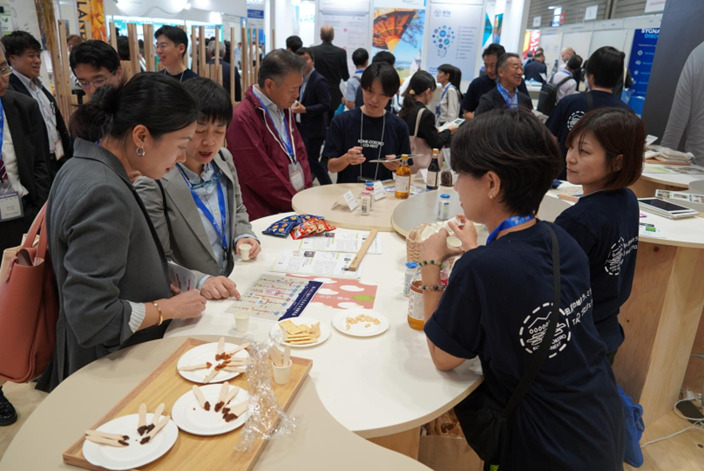
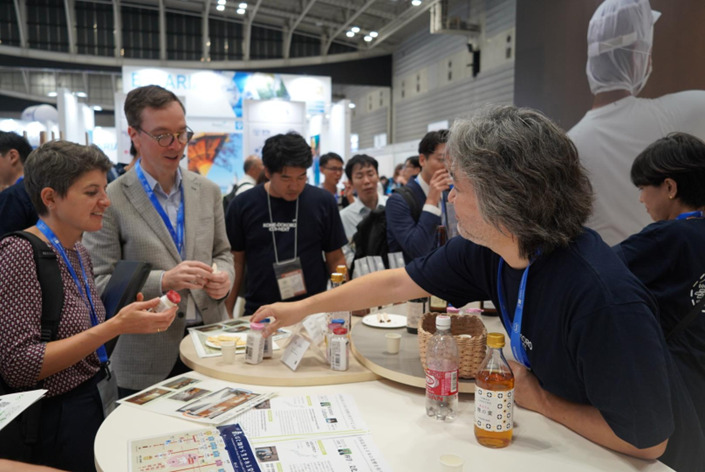
At this year’s BioJapan exhibition, we served fermented foods produced by companies participating in the Nagaoka COI-NEXT initiative at our booth and had the opportunity to explain rice and solid-state cultivation technology to experts in the biotechnology field.
There are generally two methods of microbial culture: “liquid culture” and “solid culture.” Liquid culture is a modern technique that uses culture tanks and other equipment to efficiently propagate microorganisms; it is the mainstream method in industry due to its ease of use and scalability.
Meanwhile, Japan’s world-renowned koji production employs a unique technique known as solid-state cultivation. Solid-state cultivation is a technique in which beneficial molds, such as koji mold, are grown on the surface or inside solid materials like rice, barley, and soybeans; it is used in the traditional brewing of Japanese soy sauce, miso, and sake.
Japan’s koji culture has been passed down from generation to generation and refined over hundreds of years through solid-state cultivation techniques. It is attracting global attention not merely as a traditional technique, but as a scientifically advanced microbial cultivation system. Building on the network we have established, we will work to raise international awareness of Japan’s fermentation technologies and explore new opportunities for research and development collaboration.
In Closing
Exhibiting at BioJapan provided us with a valuable opportunity to share our initiatives with a wide audience both in Japan and abroad.
We intend to continue accelerating our research and development efforts toward the realization of a sustainable society, while leveraging the unique characteristics of our region. We would like to express our heartfelt gratitude to all the companies and organizations participating in this event, to everyone at Akita COI-NEXT for their cooperation, and to everyone who visited our booth.