


We conducted a guest lecture at Nagaoka Municipal Higashi Junior High School
On June 25, Reiwa 8, the COI-NEXT Center at Nagaoka University of Technology and Science conducted an outreach class for third-year students at Nagaoka Municipal Higashi Junior High School who are enrolled in the “Industrial Course.”
In this class, we introduced the research being conducted by our university’s researchers and students, as well as how that research contributes to society.
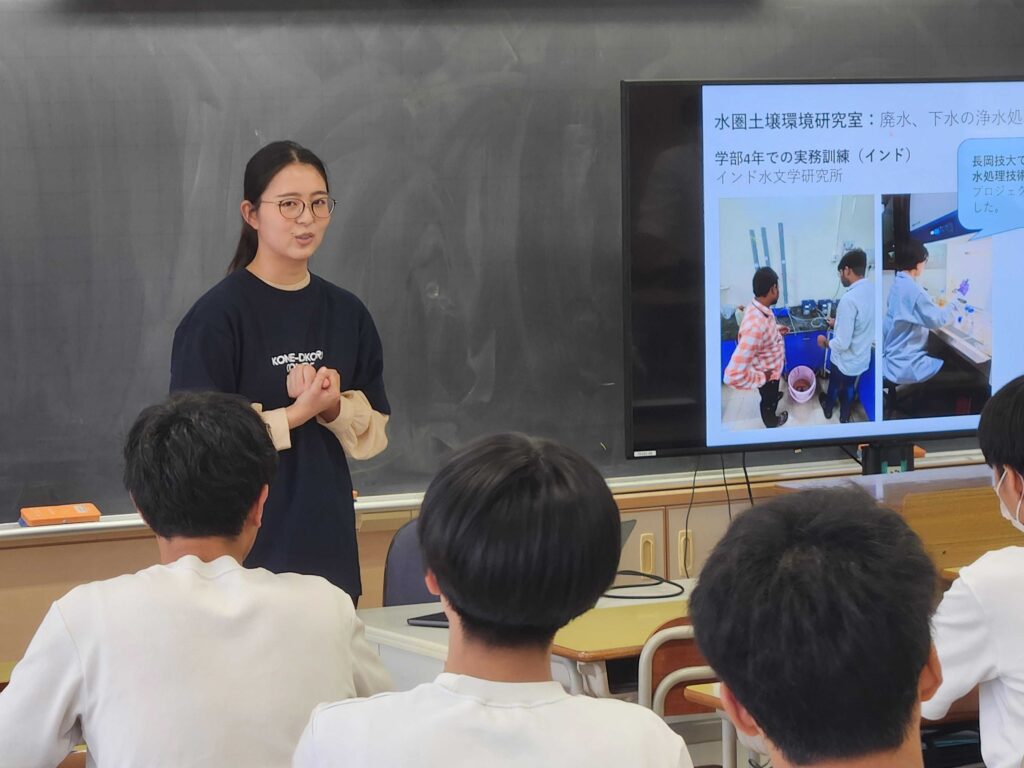
● Introduction to the University (Yukino Soga, Second-Year Master’s Student)
Ms. Soga, a graduate of Higashi Junior High School, spoke about her university studies and her experiences with practical training abroad. Ms. Soga said she had been interested in English since junior high school and that she finds it incredibly enjoyable to connect with people from all over the world and have such diverse experiences. The students were fascinated by these authentic accounts from alumni under the theme “From Nagaoka to the World.”
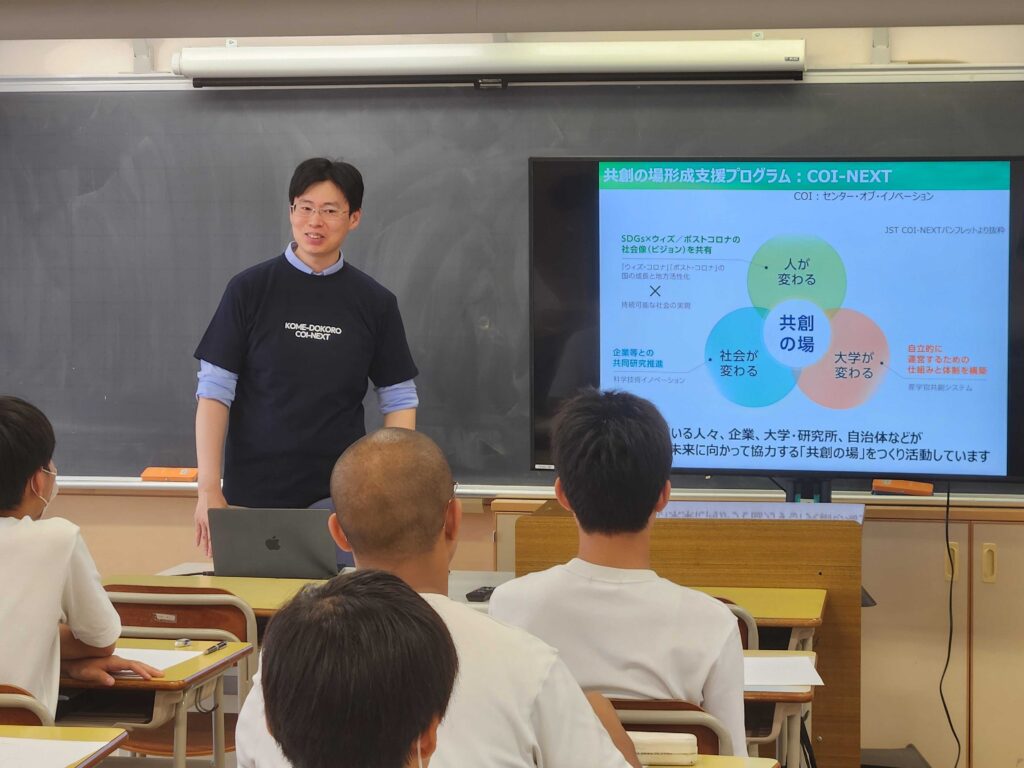
● COI-NEXT Initiatives (Yoshiyuki Suzuki, Senior URA / Specially Appointed Associate Professor)
We introduced “co-creation” initiatives in which universities, companies, and local governments collaborate to build the industries of the future, while sharing the challenges facing the region, such as the declining number of farmers and the decline of the rice industry. In particular, students were seen nodding in agreement as they watched a video featuring farmers themselves discussing the current state of agriculture in Niigata and listened to an explanation of a method for preserving rice in snow cellars—one of the research projects undertaken by this center.
● The Potential of Fermentation and Microorganisms (Assistant Professor Akihiro Nakamura)
We explained topics such as the functions of microorganisms, the difference between fermentation and decay, and the roles of koji mold and yeast, using familiar examples.
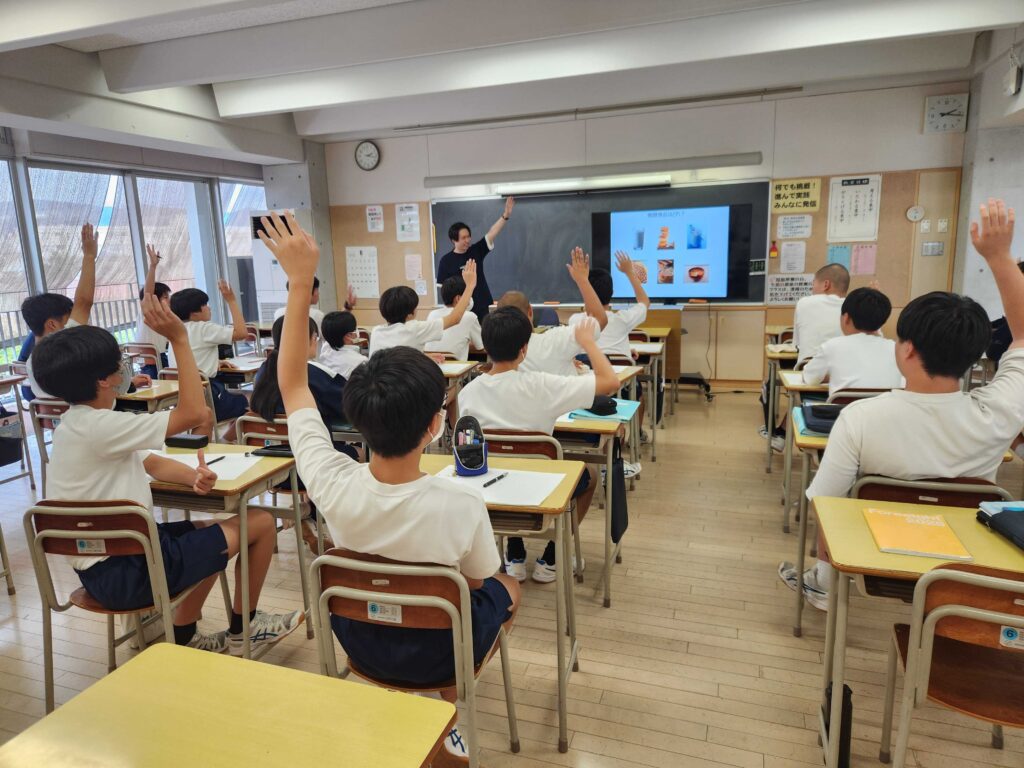
The topic of “using the power of microorganisms to create new products from rice” generated a particularly strong response from the students. In particular, during the quiz on selecting foods that utilize “fermentation” caused by microorganisms, the students were very surprised to learn that items they hadn’t considered to be fermented foods were, in fact, made through the process of “fermentation.”
● Applications of Land-Based Aquaculture and Water Treatment Technologies (Associate Professor Takahiro Watari)
We introduced water treatment research being conducted on a global scale, covering topics such as global water issues, seawater desalination, and social implementation projects in Africa. The message that “water is both the most dangerous and the most important resource” seemed to leave a strong impression on the students. The students learned that while “drinking water” is something Japanese people take for granted, it is not a given everywhere in the world, and that water treatment technology and research have the potential to save the world. They were also very surprised to learn that our university’s technology is being used in the portable toilets at the Nagaoka Fireworks Festival.
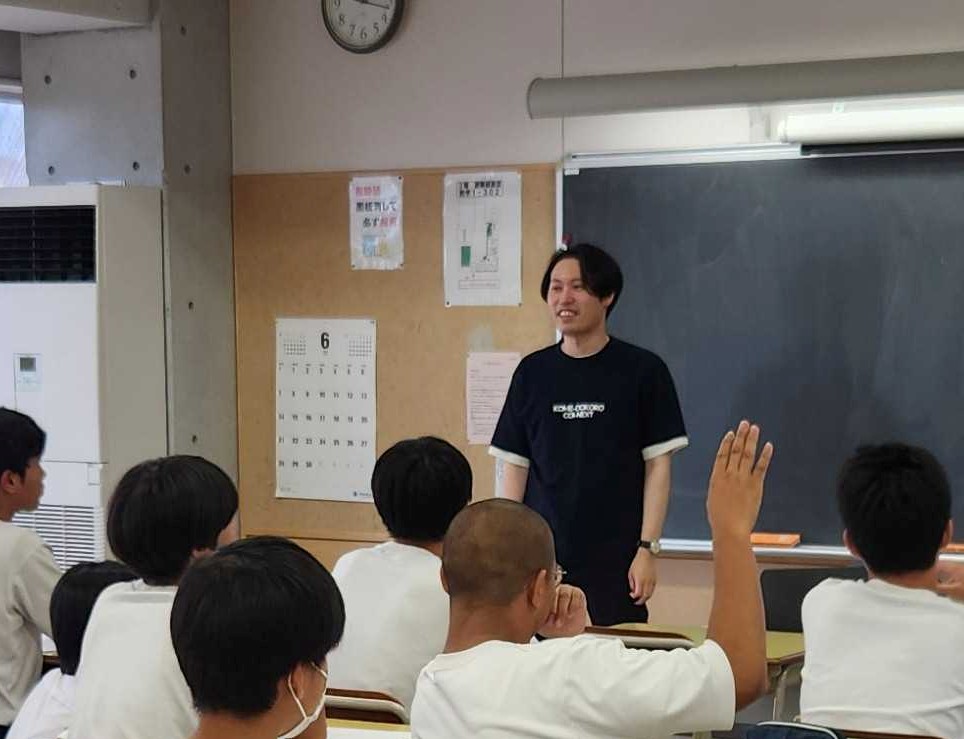
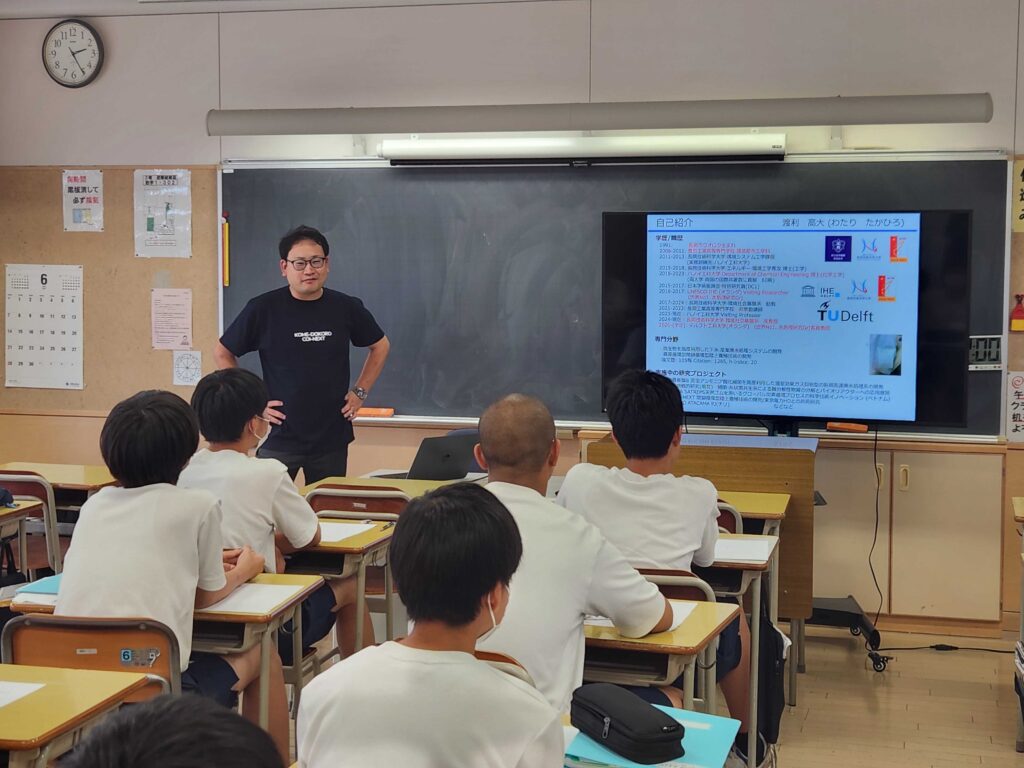
■ Questions from Students
During the Q&A session, so many questions were asked that it went over the scheduled time.
- "What has been your most challenging research project so far?"
- "What is the biggest challenge farmers face?"
- "What is the most important thing when communicating with foreigners?"
- "How do you collect microorganisms, and how do you grow them?"
- "What kinds of water-related disasters are there?"
- "How do you secure funding for research?" and so on
The students listened intently to the researchers' firsthand accounts.
■ We Distributed Rice Stored in a Snow Cellar
At the end of the class, the university is conducting research onRice Stored in a Snow CellarWe distributed it to all the students.
At the COI-NEXT main research center, we are conducting research to utilize “snow”—often regarded as a nuisance in winter—to preserve rice and maintain its natural freshness over the long term. As our research progresses, we have found that the composition of the rice differs noticeably from that of rice stored in a refrigerator, and that it retains its freshness for a longer period.
This research, which adds value to rice itself by utilizing underutilized local resources, can truly be described as one of the initiatives aimed at solving challenges in the local agricultural sector through the power of science.
■ The next generation will be the backbone of future industries
Through this outreach class,
• “How does research help solve societal challenges?”
• “What can we do to ensure the future of local industries?”
...and I was able to help the students experience that.
The COI-NEXT Nagaoka University of Technology hub will continue to collaborate with local educational institutions to expand learning opportunities for the younger generation who will lead the industries of the future.