



First- and second-graders from Fukasawa Elementary School took part in an agricultural experience activity at the University Front Farm!
On Monday, June 15, first- and second-grade students from Fukazawa Elementary School participated in an agricultural experience activity at the field in front of our university.
This event was originally scheduled to take place last fall but was canceled due to bear sightings, so it was a long-awaited day for the students and teachers at Fukasawa Elementary School, as well as for everyone involved with the COI-NEXT main hub.
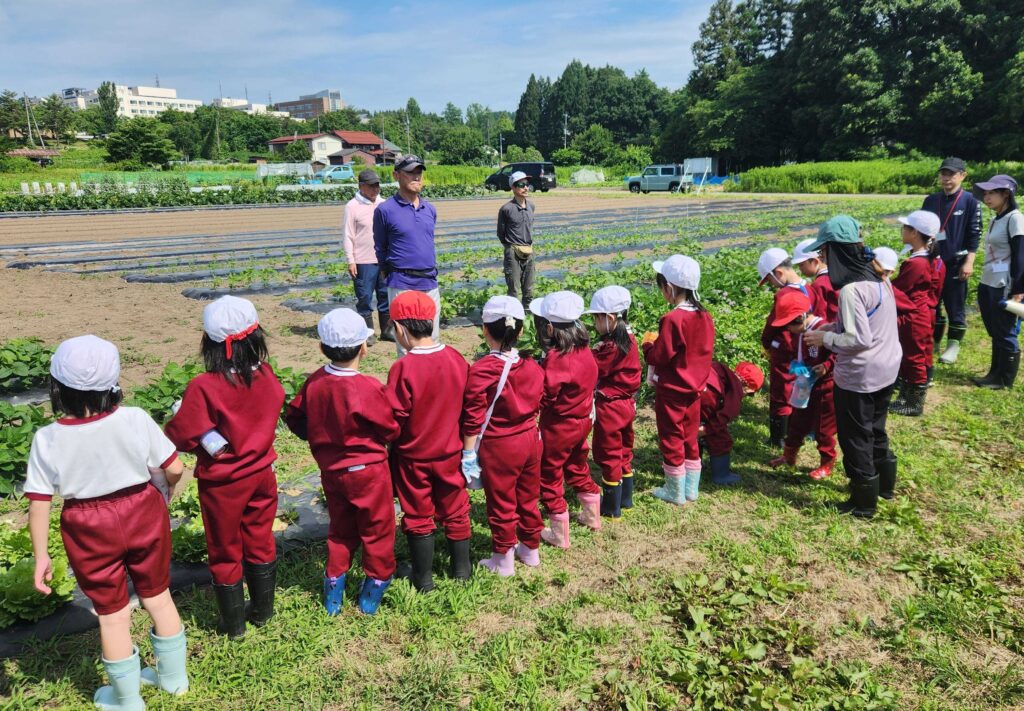
On the day of the event, we learned about vegetable cultivation from Mr. Azuma, Mr. Takano, and Mr. Takagi, university staff members who manage the farm.
First, let’s talk about pest control. Since we grow our crops without pesticides or chemical fertilizers, pests are a major challenge.
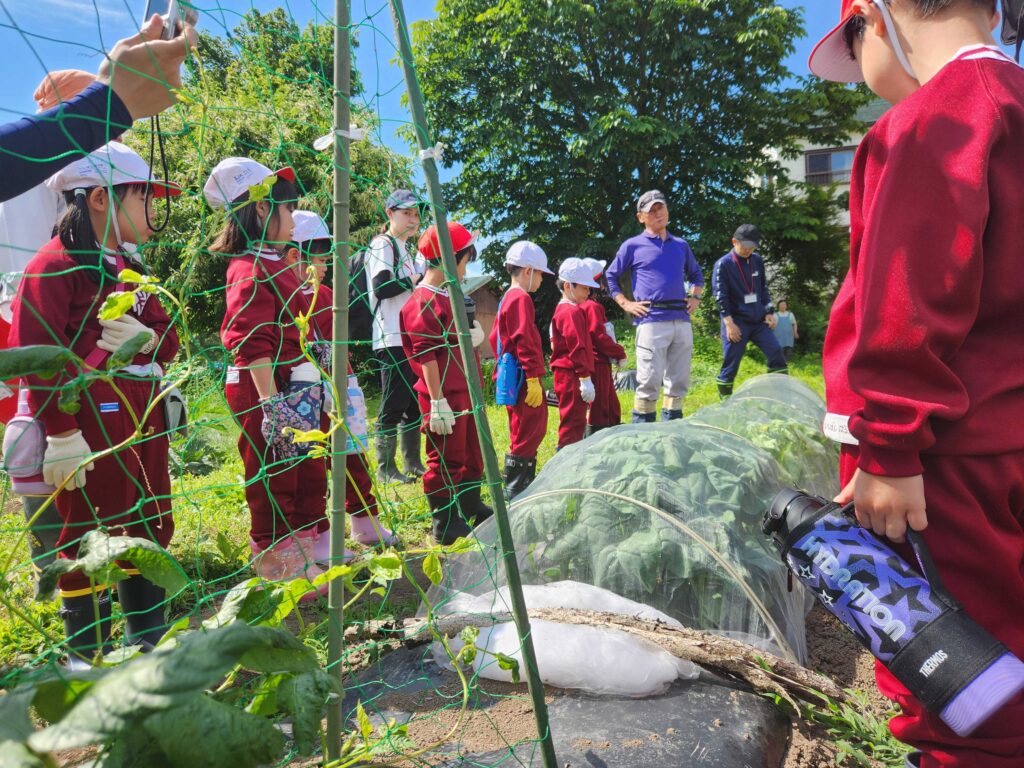
There are two main countermeasures: the first is to use an insect screen.
While this is effective for small-scale cultivation, such as in home gardens, it is difficult to cover everything with netting in large-scale cultivation, such as in commercial fields.
As a second approach, the article suggested choosing and growing vegetables that are resistant to pests.
Cabbage and broccoli are particularly prone to insect damage, and the children seemed surprised to hear that two years ago, a total of 400 plants—including broccoli, cabbage, and cauliflower—were completely destroyed by pests. On the other hand, they learned that vegetables like lettuce and garland chrysanthemum are actually disliked by insects, so choosing the right vegetables is very important.
Furthermore, insects aren’t the only enemies of vegetables. Two methods were also introduced as countermeasures against damage caused by birds, such as crows.
The first is a technique to make the watermelons harder for birds to spot. By sowing wheat around the watermelon rows, the location of the watermelons becomes harder to discern from the air, which helps prevent damage.
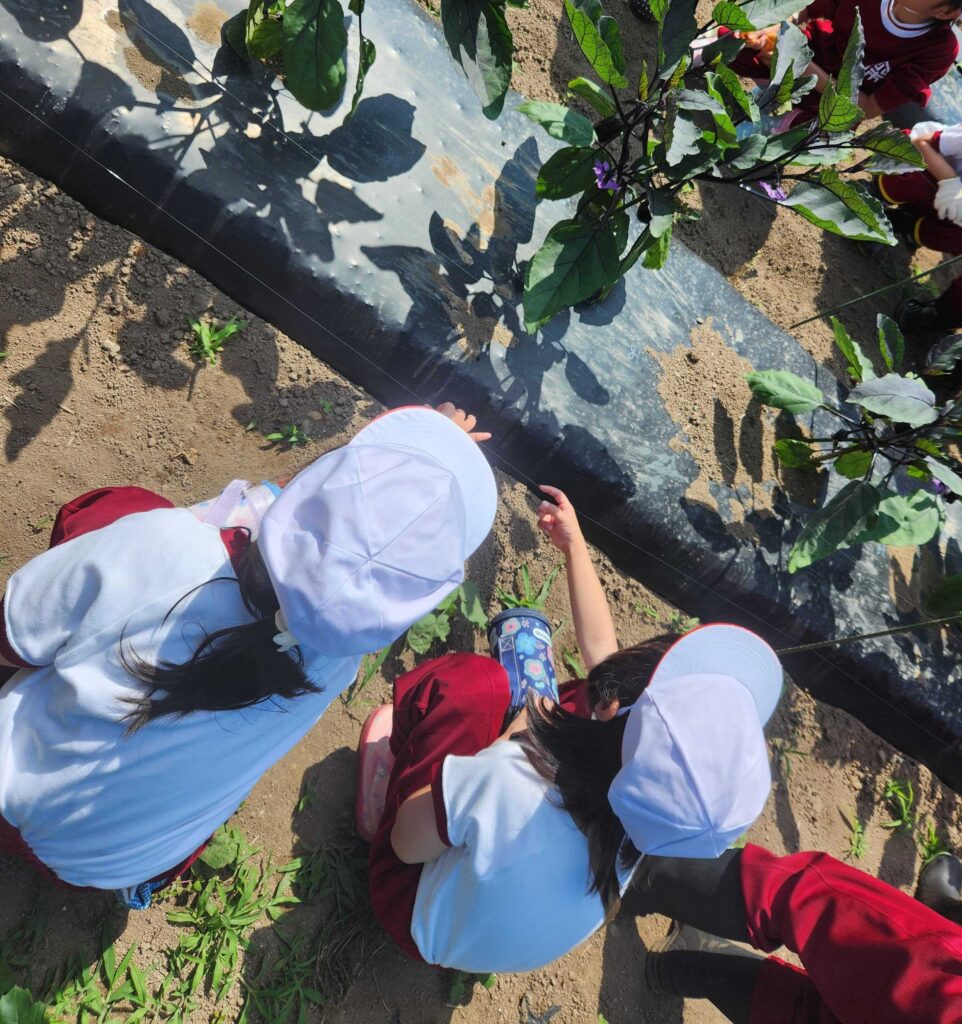
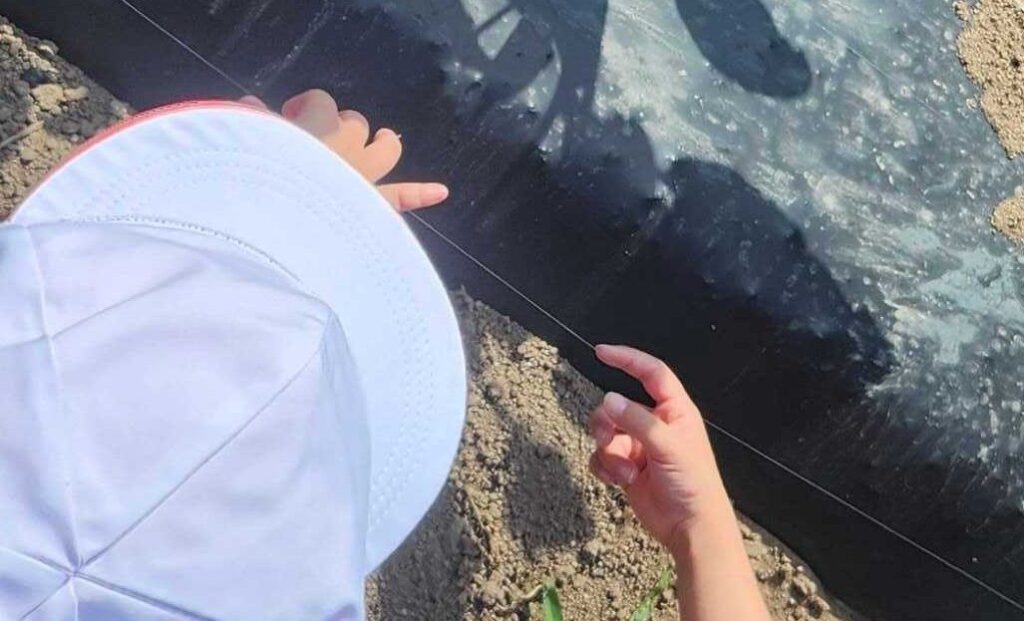
The second method involves stretching transparent string around the vegetables. Since birds dislike having their feathers damaged, they are less likely to approach when the string is hard to see. The children actually touched the string and, full of curiosity, said, “We could probably do this in our school garden, too.”
After the explanation, it’s finally time for the hands-on farming experience.
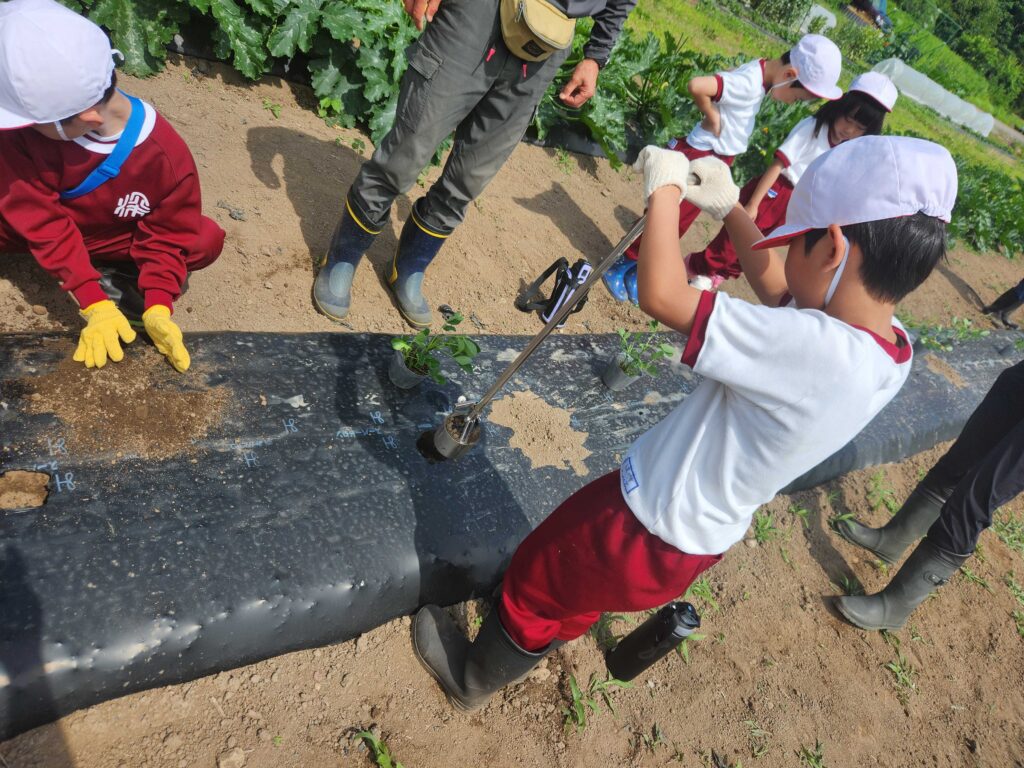
①Planting peanut seedlings (variety: Oomassari) in the field
Using a tool, we punched holes in the multi-cell trays and planted one peanut plant per person.


②Pollinating Zucchini, Harvesting Zucchini and Lettuce
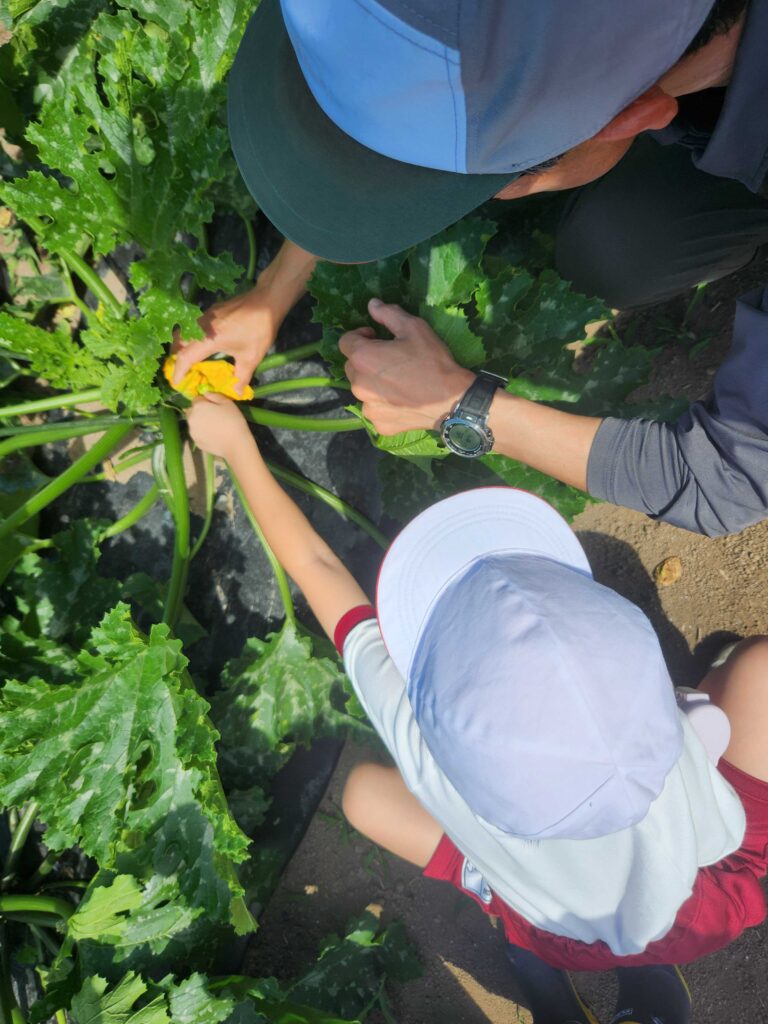
We picked up a male zucchini flower (stamens) and experienced the process of pollinating a female flower (pistils).
“The leaves are prickly, so we have to be careful,” “The yellow zucchini (stamens) have to be attached to the yellow (zucchini pistils),” and so on—we could see the children having fun while learning.
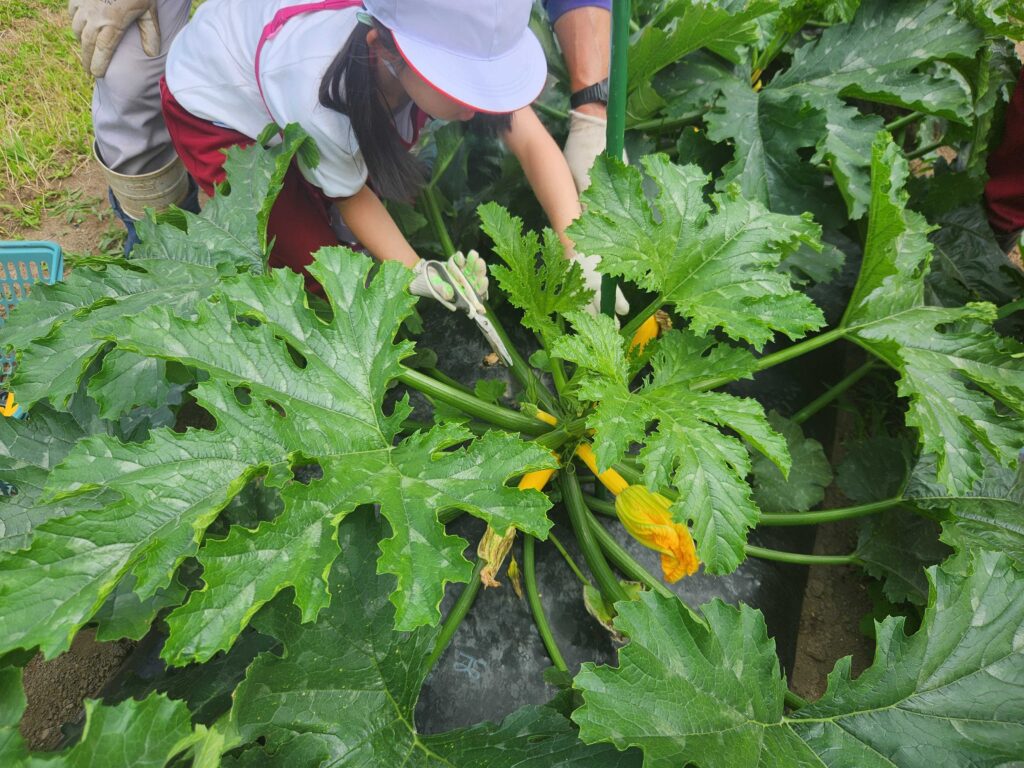
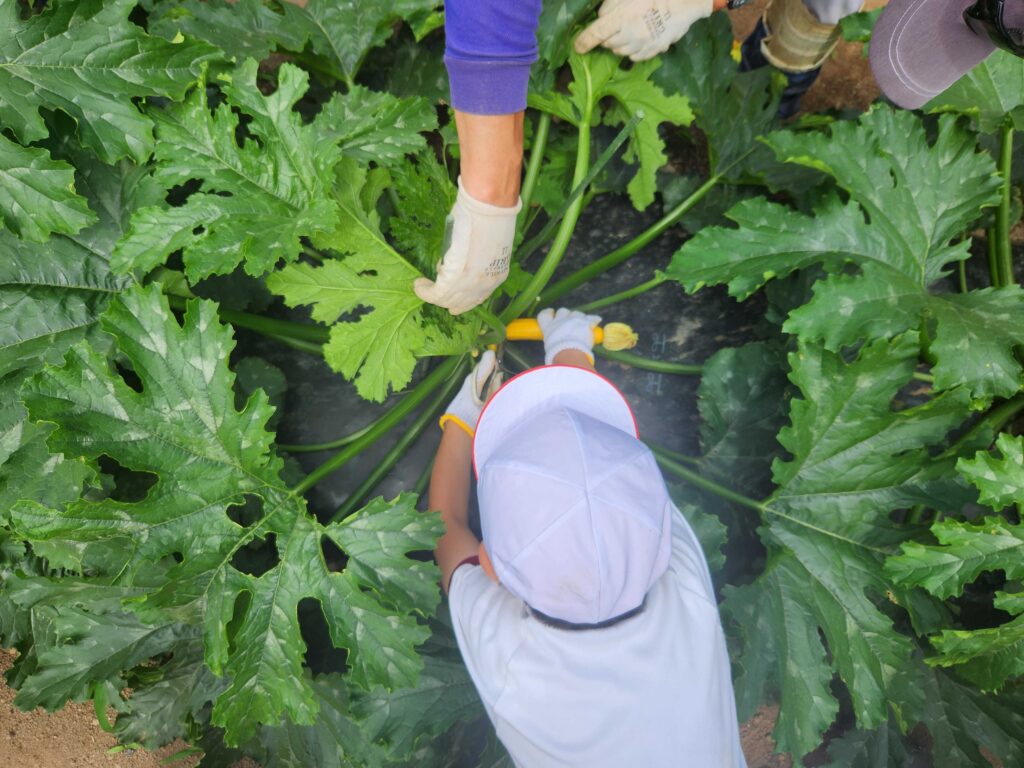
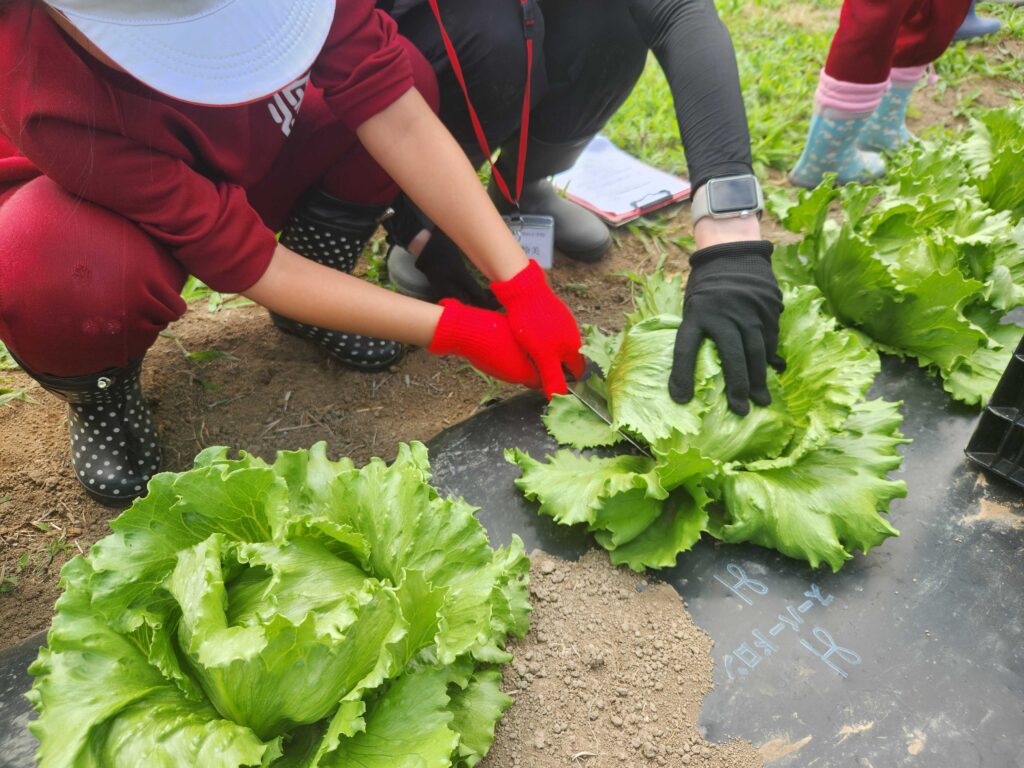
In the next harvest, we picked about 40 zucchini. We also harvested about 20 heads of lettuce that were ready to be picked. Since cutting the stems with a knife requires some strength, the children worked together with the adults, and they were all beaming with joy.
③Transplanting Edamame Using an Edamame Planter
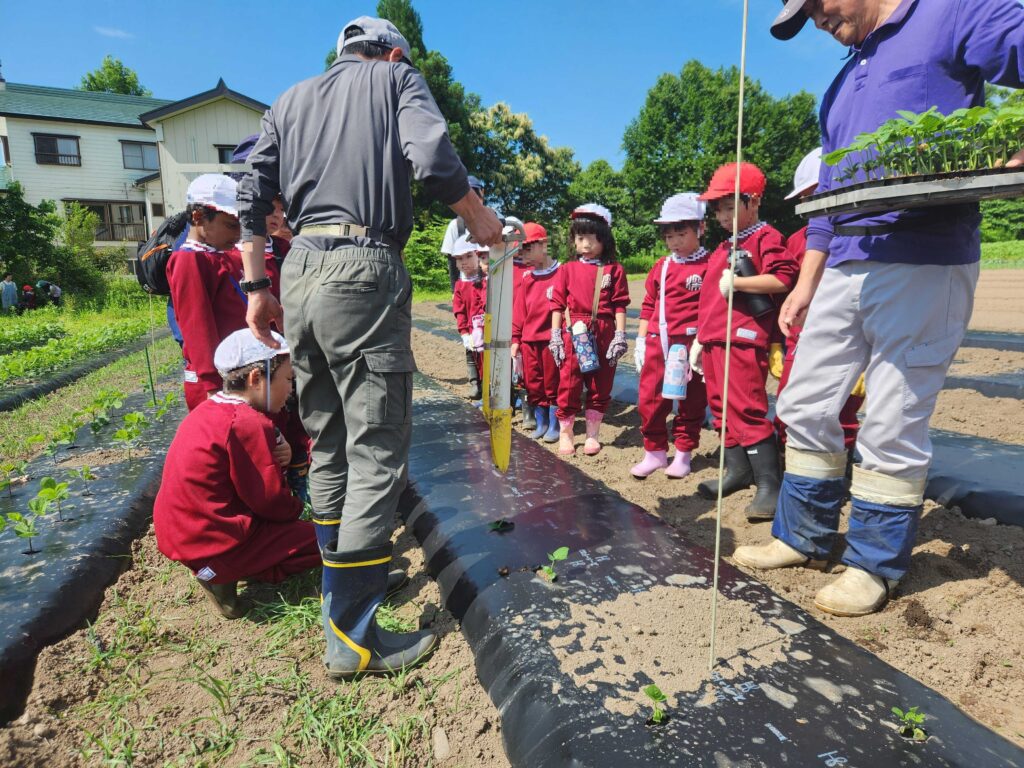
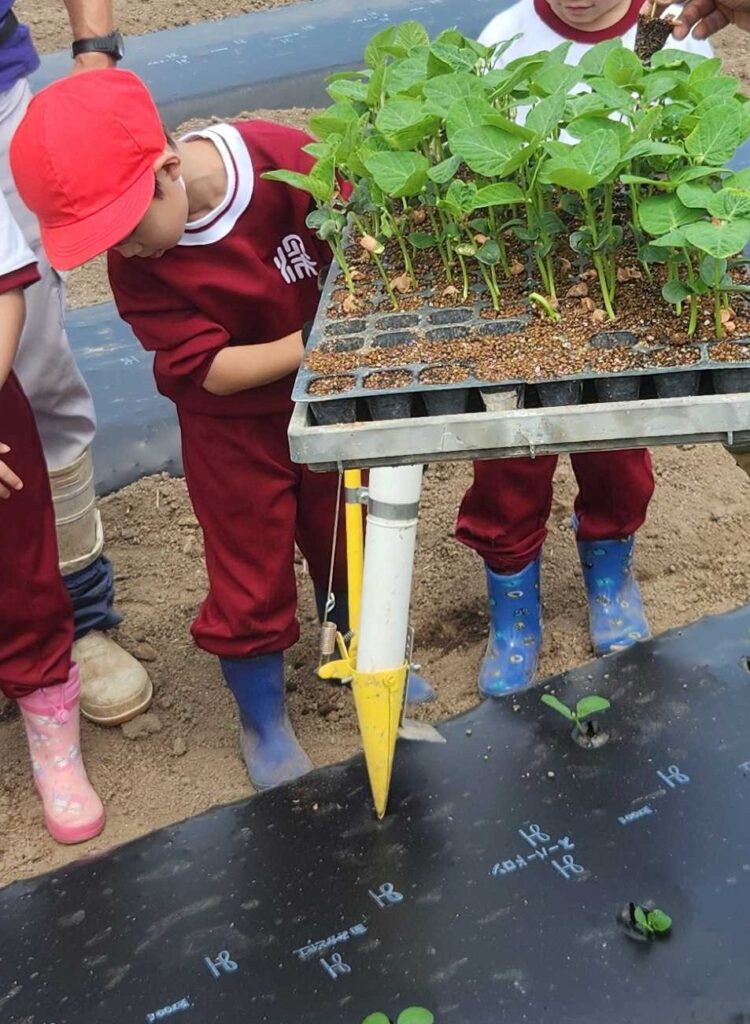
Finally, we used an edamame planter to transplant the seedlings. With this tool, we were able to plant one seedling in about three seconds—from making a hole in the mulch, placing the seedling in the hole, to covering it with soil—all without having to crouch down. The children were delighted by the experience, exclaiming, “It’s like magic!” as they saw how the tool made farm work efficient and effortless.
I think this experience allowed many children to truly appreciate the joy of growing vegetables.
Our next event, scheduled for July, is intended for third-grade and older students at Fukazawa Elementary School and will feature an introduction to large-scale agricultural machinery and a tour of facilities related to the COI-NEXT project being carried out by our university.